Reading Pet Food Labels: What Those Ingredients Actually Mean
Pet food labels are designed to look informative, but they often leave owners with just enough information to feel uncertain. This guide helps you read labels more critically and with less marketing confusion.
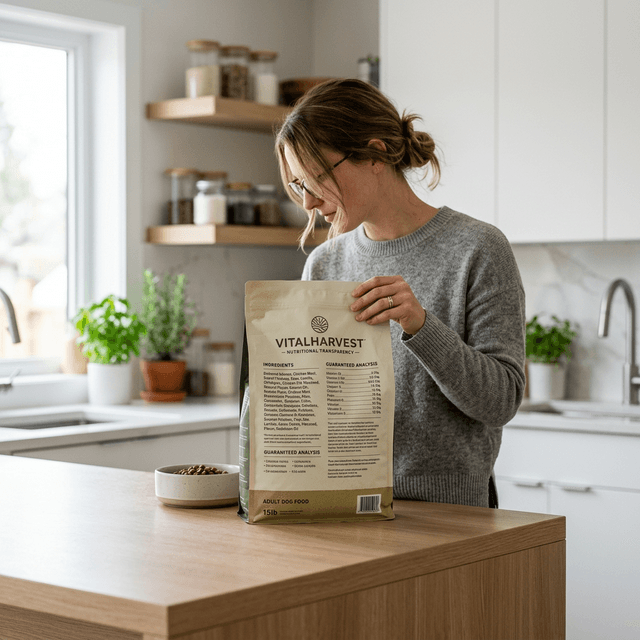
Why labels feel more useful than they often are
Packaging language is built to create confidence, not always clarity. Terms like premium, natural, holistic, or farm-raised can influence how a food feels emotionally without helping you understand nutritional value in a meaningful way.
The label is still useful, but only if you know how to read the structure instead of the marketing. That means paying attention to ingredient order, protein sources, guaranteed analysis, feeding guidance, and whether the food is complete for the life stage you need.
Ingredient order and what it can and cannot tell you
Ingredients are typically listed by weight before processing, which means water-heavy ingredients can appear higher on the list than owners expect. That is one reason a label can look meat-forward while the nutritional reality is more mixed than it appears.
Ingredient lists matter, but they do not tell the whole story on their own. You should read them together with protein quality, calorie density, your pet's tolerance, and the overall formulation purpose.
The guaranteed analysis section
Guaranteed analysis gives you basic minimums and maximums, but many owners overestimate how precise and complete it is. It is a useful snapshot, not a full nutritional biography.
It becomes more useful when you compare it against your pet's needs. A highly active dog, a senior pet, and a cat with weight concerns are not looking for the same things from the same numbers.
- Check protein and fat in context, not as isolated brag numbers.
- Review feeding guidance but validate against body condition.
- Watch how stool quality, coat, appetite, and weight respond over time.
- Do not assume expensive packaging equals better nutritional fit.
What better label reading actually helps you do
The purpose of label reading is not to turn every owner into a nutrition detective. It is to make you calmer and more informed when choosing, comparing, and adjusting food.
A good label reader does not panic at every unfamiliar ingredient. They know how to ask better questions, compare options more intelligently, and evaluate the food based on outcomes as well as packaging.