The Hidden Rules of Dog Parks: A Socialization Guide
Dog parks can be useful for some dogs and a bad fit for others. The key is not whether dog parks are universally good or bad. The key is whether this specific park, on this specific day, is actually helping your dog succeed.
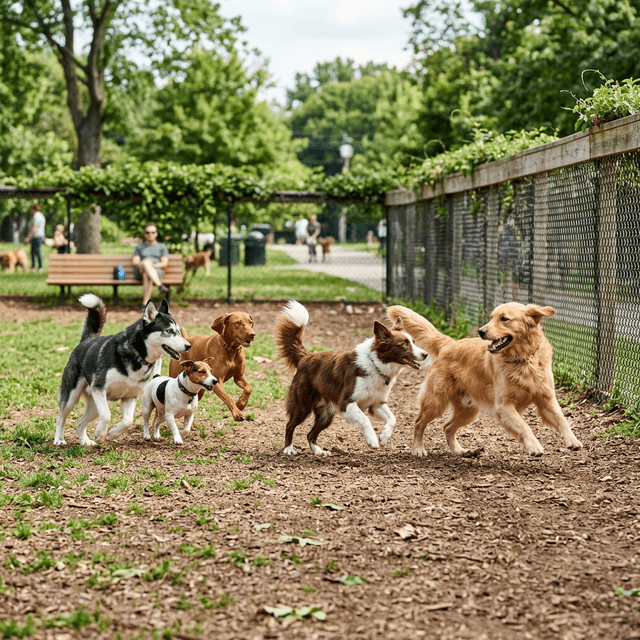
Read the park before you enter
Before opening the gate, pause and observe. What kind of energy is already inside? Are dogs able to disengage, or is the whole group locked into high-speed chase? Is one dog being repeatedly targeted? Are owners attentive enough to intervene? These questions matter more than whether your dog usually enjoys the park.
Many problems are visible before you step in. Owners get into trouble when they assume the best, unlatch quickly, and only start evaluating once their dog is already inside the social pressure cooker.
Good play is not just high energy play
Healthy play often includes role switching, pauses, loose movement, and the ability to break off and reset. It does not need to look gentle, but it should look balanced. If one dog is repeatedly cornered, body-slammed, mounted, chased without relief, or unable to disengage, the dynamic is no longer healthy.
Your job is not to make your dog tolerate every social style. Your job is to protect your dog's ability to have good experiences.
Know when to leave
Some owners stay too long because they do not want to look dramatic or they worry about being rude. Leaving early is one of the healthiest dog-park skills you can develop. The best park visit is often the one that ends while your dog is still doing well.
- Leave if energy spikes and stops looking balanced.
- Leave if your dog becomes sticky, avoidant, or over-aroused.
- Leave if owners are not managing obvious bullying.
- Leave before your dog is exhausted and making poor choices.
Use the park as an option, not a requirement
A dog does not need dog parks to be well socialized. Walks, parallel outings, structured playdates, training classes, decompression time, and enrichment may be much better fits for many temperaments.
A good dog owner is not the one who insists on using every social opportunity. It is the one who knows which opportunities are actually right for their dog.